Global Sensations: Challenging Cultural Stereotypes in US TV
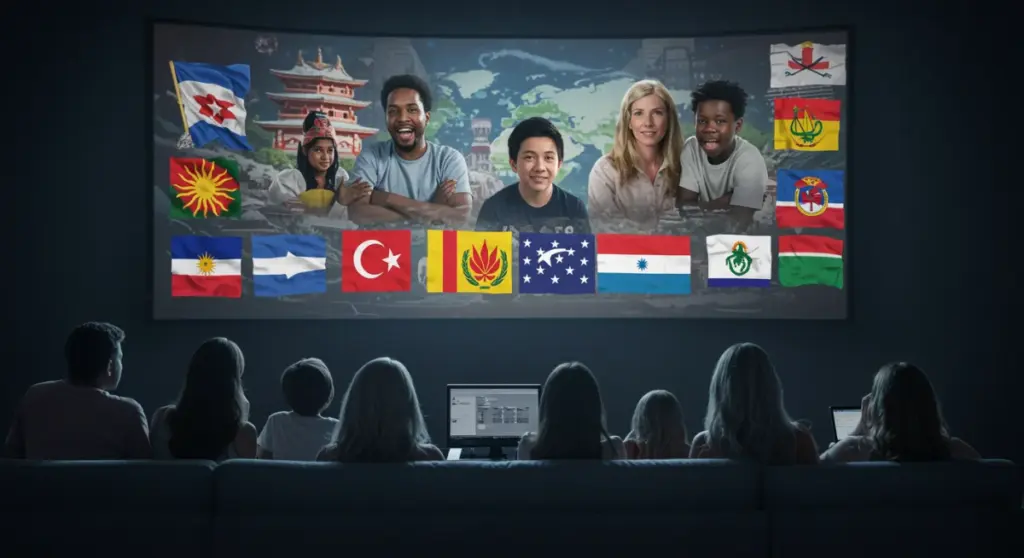
International television is actively challenging long-held cultural stereotypes in US households, fostering a nuanced understanding of global societies and diverse human experiences through engaging narratives by 2026.
By: Monica Rose on February 2, 2026
International television is actively challenging long-held cultural stereotypes in US households, fostering a nuanced understanding of global societies and diverse human experiences through engaging narratives by 2026.
The landscape of entertainment in the United States is undergoing a profound transformation, with international television emerging as a powerful force. As US households increasingly embrace foreign productions, the phenomenon of global TV stereotypes being challenged becomes more evident, offering fresh perspectives and dismantling long-standing misconceptions about cultures worldwide. This shift is not merely about new content; it’s about a deeper, more empathetic engagement with global narratives.
The rise of international content in US viewership
For decades, American television largely dictated global narratives, often presenting simplified or stereotypical depictions of other cultures. However, the advent of streaming services and increased accessibility has fundamentally altered this dynamic. Today, US audiences are actively seeking out and consuming international shows at unprecedented rates, leading to a significant cultural exchange within their own homes.
This surge in popularity isn’t accidental; international productions often offer compelling storytelling, unique perspectives, and high production values that resonate deeply with viewers. From South Korean dramas to Spanish-language thrillers and Scandinavian noir, the diversity of content is drawing in audiences eager for something beyond traditional American fare.
Streaming platforms as cultural conduits
Netflix: A pioneer in global content acquisition and production, bringing shows like ‘Squid Game’ and ‘Money Heist’ to millions of US screens.
Hulu & Max: Expanding their international catalogs, providing access to critically acclaimed series from Europe and Asia.
Specialized Streamers: Platforms like Viki (Asian dramas) and MHz Choice (European mysteries) cater to niche audiences, further broadening exposure.
The accessibility provided by these platforms has removed many barriers, such as language (through subtitles and dubbing) and distribution. This ease of access is crucial in allowing US households to engage with stories that might have previously been out of reach, paving the way for a deeper understanding of global societies.
The conclusion is clear: international content is no longer a niche interest but a mainstream phenomenon in US viewership. This widespread consumption sets the stage for a critical examination and eventual dismantling of pervasive cultural stereotypes, as audiences are exposed to authentic portrayals.
Challenging the ‘monolithic Asia’ stereotype
One of the most persistent cultural stereotypes in Western media has been the portrayal of Asia as a single, homogenous entity. This often leads to a conflation of diverse nations, languages, and traditions into a simplistic, undifferentiated ‘Asian’ identity. International TV, particularly from East and Southeast Asia, is actively dismantling this harmful generalization.
Shows from South Korea, Japan, China, and even newer entries from Thailand and the Philippines, offer distinct cultural nuances, historical contexts, and societal values. Viewers are learning to differentiate between the vibrant street food culture of Seoul, the intricate social etiquette of Tokyo, and the rich historical tapestry of Beijing.
Diverse narratives from East Asia
Korean dramas, or K-dramas, have become a global sensation, showcasing everything from high-stakes corporate power struggles to heartwarming romantic comedies. These narratives provide a window into South Korean family dynamics, work culture, and societal pressures, revealing a complex modern nation.
Family dynamics: K-dramas often portray multi-generational households and the intricate relationships within them, challenging Western individualistic norms.
Societal pressures: Themes of academic pressure, beauty standards, and corporate competition reveal specific societal anxieties.
Cultural celebrations: Viewers are exposed to traditional holidays, cuisine, and modern trends unique to Korea.
Similarly, Japanese anime and dramas explore themes ranging from intricate fantasy worlds to slice-of-life stories, reflecting a society with its own unique blend of tradition and modernity. These shows often delve into themes of honor, community, and personal growth, distinct from a generalized ‘Asian’ identity.
By presenting distinct national identities, cultural practices, and societal issues, international TV from Asia is effectively challenging the ‘monolithic Asia’ stereotype, encouraging US audiences to appreciate the vast diversity within the continent.
Deconstructing Latin American caricatures
Latin America has frequently been reduced to caricatures in US media, often depicted through lenses of poverty, violence, or fiery passion without depth. International TV, particularly from Mexico, Colombia, and Brazil, is now offering multifaceted portrayals that defy these simplistic narratives and reveal the rich tapestry of Latin American cultures.
From sophisticated crime thrillers to compelling family sagas and vibrant romantic comedies, these shows present characters with complex motivations, diverse socio-economic backgrounds, and authentic cultural practices. This nuanced storytelling helps US audiences move beyond superficial stereotypes.
Beyond the telenovela trope
While telenovelas remain popular, contemporary Latin American productions are far more diverse in genre and thematic depth. Shows like ‘Narcos’ (though produced by Netflix, it extensively features Colombian talent and culture) or ‘La Casa de las Flores’ from Mexico, showcase a range of experiences.
Economic diversity: Portraying characters from various social classes, from urban elites to rural communities, challenging single-story narratives of poverty.
Political complexities: Addressing historical and contemporary political issues with sensitivity and detail, moving beyond simplistic portrayals of instability.
Family structures: Exploring the strength and complexities of extended family bonds, often central to Latin American cultures, in a way that is both relatable and distinct.
Brazilian series, for instance, often delve into the country’s unique racial dynamics, vibrant music scene, and diverse landscapes, offering a much richer understanding than any stereotype could convey. These productions highlight the distinct identities within Latin America, from the Caribbean to the Southern Cone.
In conclusion, international TV is proving instrumental in deconstructing the long-standing caricatures of Latin America, presenting instead a vibrant, diverse, and complex region with rich cultural identities that resonate with a global audience.
Redefining European identity beyond national clichés
European cultures in US media have often been categorized by broad, sometimes whimsical, national clichés: the romantic French, the stoic Germans, the eccentric British. However, the influx of European dramas, particularly from Scandinavia, Germany, France, and Spain, is revealing a much more intricate and modern European identity, challenging these outdated notions.
These shows delve into contemporary societal issues, complex moral dilemmas, and the everyday lives of diverse characters across the continent. They showcase the internal struggles and modern realities of European nations, moving past tourist-brochure stereotypes.
Scandinavia’s nuanced storytelling
Scandinavian noir, with its dark, atmospheric thrillers, has captivated US audiences for years. These series, while entertaining, also offer insights into Nordic societies, often touching upon themes of social welfare, gender equality, and the darker aspects of human nature, far removed from simplistic Viking or minimalist design stereotypes.
Social commentary: Many Nordic shows subtly critique aspects of their own societies, inviting viewers to think critically about social structures.
Gender roles: Strong, complex female protagonists are common, reflecting progressive gender dynamics in many Scandinavian countries.
Environmental themes: Often integrated into storylines, reflecting a deep societal concern for the environment.
From German dramas exploring reunification and modern challenges to French series delving into Parisian multiculturalism and artistic dilemmas, these productions offer a granular view of European life. Spanish shows, too, move beyond flamenco and siestas, presenting contemporary urban life, economic struggles, and diverse regional identities.
By showcasing modern European concerns and diverse cultural expressions, international TV is effectively redefining European identity for US audiences, replacing tired clichés with a more authentic and contemporary understanding of the continent’s rich tapestry.
Shattering Middle Eastern and North African misrepresentations
The portrayal of the Middle East and North Africa (MENA) in US media has, for too long, been plagued by narrow and often negative stereotypes, frequently reducing diverse cultures to themes of conflict, extremism, or exoticism. However, a growing number of international TV productions from the MENA region are actively challenging these misrepresentations, offering nuanced and humanizing perspectives.
Shows from countries like Saudi Arabia, Egypt, and Israel, now more accessible to US audiences, present a wide array of stories that highlight the region’s rich history, diverse societies, and modern complexities. They introduce characters with relatable struggles, aspirations, and everyday lives that defy simplistic, one-dimensional portrayals.
Authentic narratives from the MENA region
Series like ‘Fauda’ (Israel) or ‘Jinn’ (Jordan/Netflix) and various productions from Saudi Arabia and Egypt are providing glimpses into the diverse social fabric, family dynamics, and cultural intricacies of the region. These shows reveal that life in the Middle East is as varied and complex as anywhere else in the world, with its own unique blend of tradition and modernity.
Family values: Many series explore the deep importance of family and community, often challenging individualistic Western perspectives.
Youth culture: Portraying the aspirations, challenges, and modern lifestyles of young people, breaking away from traditionalist stereotypes.
Everyday life: Focusing on mundane routines, humor, and personal relationships, humanizing characters beyond political or religious lenses.
These productions are crucial in fostering empathy and understanding, allowing US viewers to see beyond the headlines and appreciate the human stories within the region. They showcase the vibrant arts, diverse landscapes, and the resilience of people, directly confronting the often-negative stereotypes prevalent in Western media.
Through these authentic narratives, international TV is playing a vital role in shattering the long-standing misrepresentations of the Middle East and North Africa, promoting a more accurate and respectful understanding of these rich cultures.
The future of global storytelling in US households
The trajectory of international television in US households points towards an even more interconnected and culturally aware future. By 2026, the lines between ‘domestic’ and ‘foreign’ content will likely blur further, as audiences increasingly prioritize compelling storytelling regardless of its origin. This evolution promises to deepen cultural understanding and empathy on a grand scale.
The continuous influx of diverse narratives will not only challenge existing stereotypes but also prevent new ones from taking root. As viewers are exposed to a wider range of human experiences, they develop a more nuanced understanding of the world, recognizing the universal themes that connect us while celebrating the unique aspects of each culture.
Beyond entertainment: educational impact
Language exposure: Increased viewing of subtitled or dubbed content can foster an interest in foreign languages.
Historical context: Many international shows are rooted in historical events, offering informal education about global history.
Social issues: Addressing complex social challenges in different cultural contexts provides valuable comparative insights.
This trend also encourages a more critical consumption of media, prompting viewers to question existing portrayals and seek out diverse perspectives. The collaborative nature of global production is also on the rise, with co-productions between US and international studios becoming more common, further integrating global narratives.
Ultimately, the future of global storytelling in US households is bright, promising a richer, more inclusive, and stereotype-free viewing experience that contributes significantly to cross-cultural understanding and global citizenship.
Key Challenge
Impact of International TV
Monolithic Asia
Diverse K-dramas, anime, and Chinese series showcase distinct national identities and cultures.
Latin American Caricatures
Sophisticated dramas from Mexico, Colombia, and Brazil reveal complex societies beyond stereotypes.
European National Clichés
Nordic noir and modern European dramas unveil contemporary social issues and diverse identities.
MENA Misrepresentations
Authentic narratives from Saudi Arabia, Egypt, and Israel humanize characters and defy negative stereotypes.
Frequently asked questions about global TV’s cultural impact
How are streaming services contributing to challenging cultural stereotypes?▼
Streaming services like Netflix, Hulu, and specialized platforms provide unprecedented access to a vast array of international content. By making diverse shows readily available, they expose US audiences to authentic cultural narratives and nuanced portrayals, directly challenging and dismantling long-held stereotypes that were often perpetuated by limited media exposure.
What specific regions are seeing their stereotypes most effectively challenged?▼
Regions like East Asia (e.g., South Korea with K-dramas), Latin America (e.g., Mexico, Colombia with sophisticated dramas), and the Middle East and North Africa (MENA) are experiencing significant shifts. Their productions are presenting complex societies, diverse family structures, and modern challenges that profoundly contradict previous monolithic or negative stereotypes.
How do authentic portrayals in international TV benefit US audiences?▼
Authentic portrayals in international TV enrich US audiences by fostering empathy, promoting cross-cultural understanding, and broadening worldviews. They provide insights into different customs, social norms, and historical contexts, moving beyond superficial understandings and encouraging a more informed and respectful global perspective among viewers.
Will this trend of stereotype challenging continue to grow by 2026?▼
Yes, the trend is expected to accelerate significantly by 2026. As global production collaborations increase and streaming platforms continue to invest in international content, the exposure to diverse narratives will only grow. This will further blur cultural boundaries and solidify the role of international TV in dismantling stereotypes and promoting global understanding.
What role do subtitles and dubbing play in this cultural shift?▼
Subtitles and dubbing are crucial enablers of this cultural shift. They remove language barriers, making international shows accessible to a wider US audience. This accessibility is fundamental to allowing viewers to engage with stories from different cultures without needing to learn a new language, thereby facilitating the broader understanding and challenging of stereotypes.
Conclusion
The transformative power of international television in US households cannot be overstated. By consistently delivering authentic, nuanced narratives from around the globe, these productions are actively challenging and dismantling harmful cultural stereotypes. This shift is fostering a more informed, empathetic, and interconnected viewership, paving the way for a deeper appreciation of global diversity and a more accurate understanding of the world’s myriad cultures by 2026 and beyond.