Budget Fantasy Epics: Innovations for Non-Hollywood Success
Non-Hollywood productions are successfully bringing fantasy epics to life on a budget by leveraging three key innovations: advanced virtual production, AI-driven content generation, and strategic global co-production models, transforming the landscape of genre storytelling.
By: Monica Rose on February 2, 2026
Non-Hollywood productions are successfully bringing fantasy epics to life on a budget by leveraging three key innovations: advanced virtual production, AI-driven content generation, and strategic global co-production models, transforming the landscape of genre storytelling.
Bringing grand visions to the screen without a blockbuster budget might seem like a Herculean task, especially for intricate fantasy worlds. Yet, non-Hollywood productions are redefining what’s possible, proving that epic storytelling doesn doesn’t always demand astronomical spending. This article delves into how three production innovations are driving success for non-Hollywood productions in current trends, specifically focusing on how they craft budget fantasy epics with astounding visual fidelity and narrative depth.
The Rise of Virtual Production: Beyond Green Screens
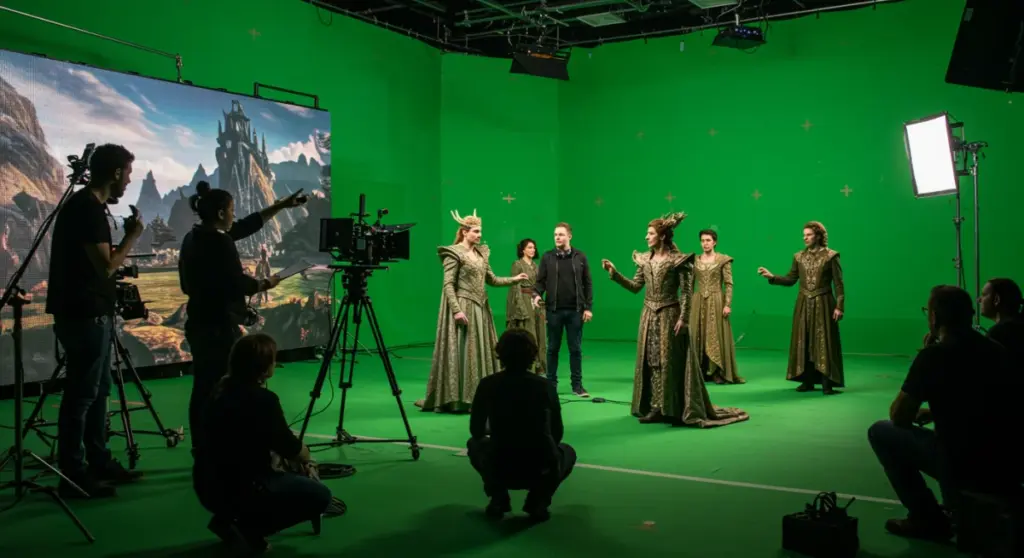
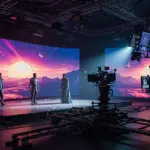
Virtual production has emerged as a game-changer for filmmakers operating outside the traditional studio system. It’s more than just an evolution of visual effects; it’s a paradigm shift that integrates real-time rendering, LED stages, and motion capture to create immersive environments during principal photography. This technology significantly reduces the need for extensive location shooting and costly post-production fixes, making it ideal for crafting expansive fantasy worlds on a tighter budget.
Historically, fantasy productions relied heavily on green screens, which often led to a disconnect between actors and their digital surroundings. Virtual production, however, places actors directly within a dynamic, rendered world displayed on massive LED screens. This immediate visual feedback enhances performances, allows for more intuitive cinematography, and ultimately produces more convincing and visually stunning results.
Real-Time Rendering and LED Walls
The core of modern virtual production lies in real-time rendering engines, such as Unreal Engine, paired with large LED video walls. These technologies allow filmmakers to:
Visualize instantly: Directors and cinematographers can see the final shot with all digital elements in real-time, enabling on-the-fly adjustments to lighting, set dressing, and camera angles.
Enhance actor immersion: Actors perform within a visually complete environment, which helps them better react to and interact with the fantasy world around them. This leads to more authentic and compelling performances.
Reduce post-production costs: Many visual effects are captured in-camera, minimizing the need for extensive compositing and VFX work later, saving both time and money.
For budget fantasy epics, this means that elaborate castles, alien landscapes, or mystical forests can be rendered and displayed on set, eliminating the need to physically build complex sets or travel to remote locations. This approach not only saves money but also provides unparalleled creative control and flexibility, allowing independent creators to compete with larger studios in terms of visual spectacle.
Furthermore, the ability to iterate quickly and experiment with different visual styles within the virtual environment empowers smaller teams to achieve a polished look without the extensive resources typically associated with such endeavors. The learning curve for these tools is becoming increasingly accessible, democratizing high-end visual storytelling.
AI-Driven Content Generation: A New Creative Frontier
Artificial intelligence is rapidly transforming various aspects of film production, and for non-Hollywood fantasy epics, it offers unprecedented opportunities for content generation. From conceptual design to asset creation and even rudimentary script development, AI tools are becoming invaluable for teams looking to maximize their creative output with limited resources. This technology allows filmmakers to accelerate workflows, generate diverse content, and explore ideas that might otherwise be too costly or time-consuming to pursue.
AI’s role isn’t about replacing human creativity but augmenting it, providing powerful tools that handle repetitive tasks or generate multiple variations of concepts. This frees up human artists and writers to focus on refinement, storytelling, and the unique artistic vision that only human ingenuity can provide. For studios producing budget fantasy epics, AI is becoming an indispensable partner.
Automating Asset Creation and World-Building
One of the most significant benefits of AI for fantasy productions is its ability to automate the creation of 3D assets, textures, and even entire environments. This includes:
Procedural generation: AI algorithms can generate vast, detailed landscapes, intricate cityscapes, or unique creature designs based on specific parameters, providing a rich backdrop for fantasy narratives.
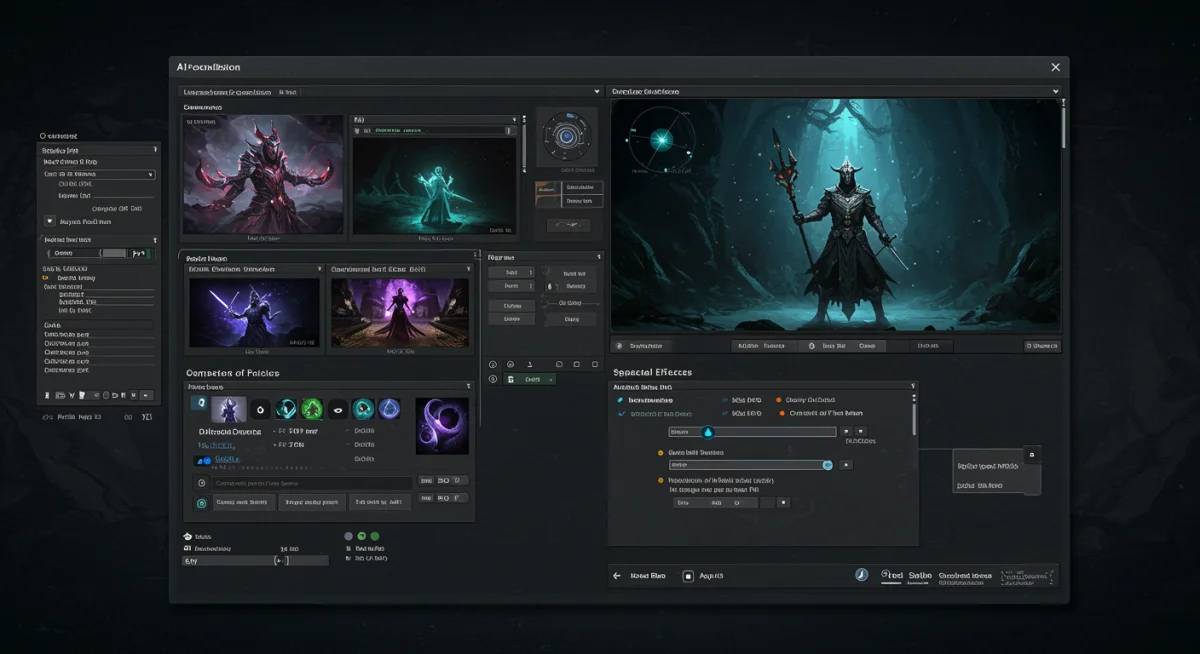
Concept art and storyboarding: AI image generators can quickly produce a multitude of concept art variations, helping artists visualize characters, costumes, and settings in record time. This accelerates the pre-production phase and refines the artistic direction.
Dialogue and script assistance: While still in early stages, AI can assist writers by generating dialogue options, suggesting plot points, or even creating basic script outlines, helping to overcome writer’s block and explore new narrative avenues.
The efficiency gains from AI-driven content generation are substantial. What once took weeks or months for a team of artists can now be accomplished in days or even hours, allowing non-Hollywood productions to develop much larger and more complex fantasy worlds than their budgets would traditionally allow. This democratizes the creation of visually rich stories, making epic tales accessible to independent filmmakers.
Moreover, AI can be used to analyze existing fantasy literature and films, identifying common tropes and successful narrative structures. This data-driven insight can help filmmakers craft stories that resonate with audiences while still maintaining originality. The integration of AI into the creative pipeline represents a profound shift in how films, especially those with ambitious visual requirements, are made.
Global Co-Production Models: Tapping into Worldwide Talent
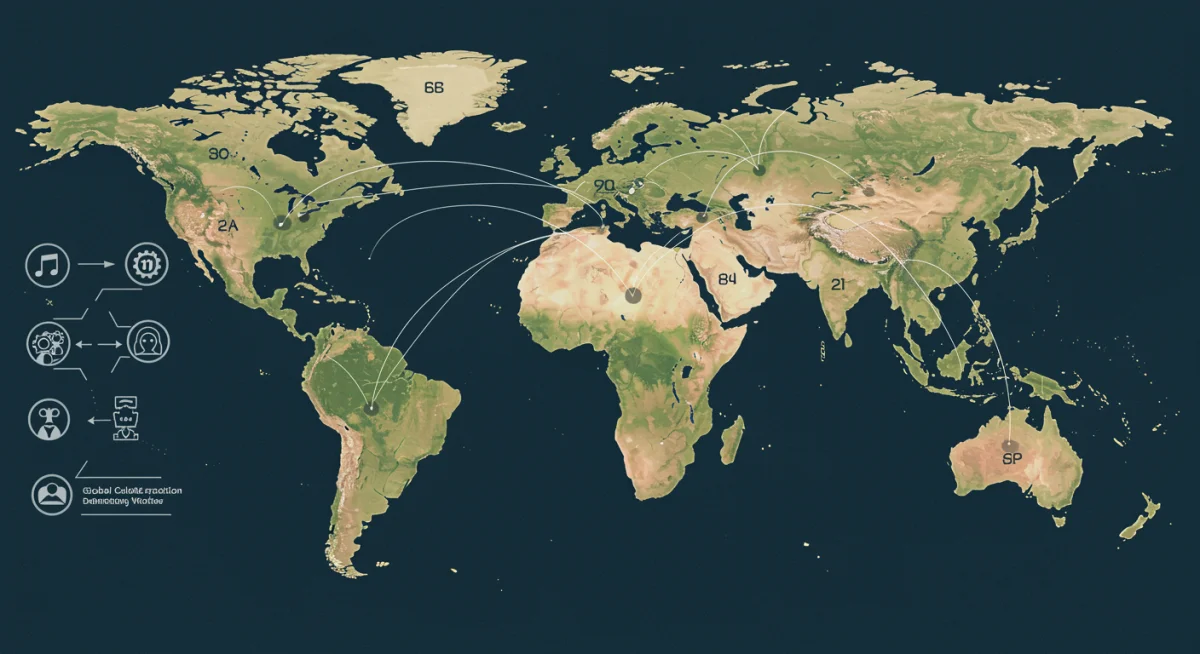
In an increasingly interconnected world, non-Hollywood productions are leveraging global co-production models to bring their budget fantasy epics to life. This strategy involves partnering with production companies, talent, and resources from different countries, often to combine financial incentives, diverse creative perspectives, and access to specialized skills. It’s a pragmatic approach that allows filmmakers to pool resources, share costs, and tap into a global talent pool, circumventing the financial constraints often faced by independent projects.
Global co-productions are not just about cost-sharing; they foster cultural exchange and lead to richer, more diverse storytelling. By collaborating across borders, productions can access unique locations, specialized crews, and fresh creative voices that might be unavailable or too expensive in a single market. This approach is particularly beneficial for fantasy genres, which often thrive on unique cultural aesthetics and diverse mythologies.
Strategic Partnerships and Financial Benefits
The benefits of global co-production extend beyond simply dividing expenses. Key advantages include:
Access to tax incentives and funding: Many countries offer attractive tax rebates, grants, and subsidies for international co-productions, significantly reducing the overall budget.
Expanded market reach: Co-productions often gain automatic distribution in the partner countries, broadening their audience base and increasing revenue potential.
Diverse talent and expertise: Collaborating with international teams introduces new perspectives, technical skills, and creative approaches, enriching the final product.
For non-Hollywood productions aiming to create budget fantasy epics, these strategic partnerships are crucial. They allow access to resources that would otherwise be out of reach, such as specialized visual effects houses in one country, highly skilled costume designers in another, or unique filming locations that add authentic flavor to a fantasy setting. The logistical challenges of managing international teams are increasingly mitigated by advanced communication tools and experienced co-production facilitators.
This model encourages a synergy of creative and financial resources, enabling projects to achieve a scope and scale that would be impossible for a single independent entity. It is a testament to the idea that great stories can emerge from anywhere, with the right strategic alliances.
Streamlined Pre-Production with Digital Tools
Efficient pre-production is paramount for any film, but especially for budget fantasy epics where every dollar counts. Non-Hollywood productions are increasingly adopting advanced digital tools and methodologies to streamline their planning phases, ensuring that production runs as smoothly and cost-effectively as possible. This includes everything from digital scouting and virtual location management to integrated project management software and sophisticated scheduling algorithms. These tools help teams visualize, plan, and execute complex fantasy elements without the traditional overhead.
The advent of accessible, powerful software has democratized many aspects of pre-production. What once required extensive physical resources and large teams can now be managed by smaller, agile groups, allowing independent filmmakers to maintain tight control over their projects while still achieving professional results. This efficiency is critical for delivering ambitious fantasy narratives on a budget.
Digital Scouting and Storyboarding
Leveraging digital technologies in pre-production offers significant advantages:
Virtual location scouting: Using drones, 3D scans, and virtual reality (VR) walkthroughs, filmmakers can scout and assess potential fantasy locations from anywhere in the world, saving on travel costs and time.
Advanced storyboarding and animatics: Digital storyboarding tools allow for rapid iteration and visualization of complex action sequences or intricate magical effects, ensuring that everyone on the team is aligned with the creative vision before shooting begins.
Integrated production management: Cloud-based platforms facilitate seamless collaboration among diverse teams, managing schedules, budgets, and asset libraries in real-time, which is crucial for complex fantasy projects.
These tools not only save money but also enhance creative precision. Directors can visualize scenes with greater accuracy, cinematographers can plan intricate shots, and visual effects supervisors can pre-visualize complex sequences, all before a single frame is shot. This meticulous planning minimizes costly reshoots and ensures that resources are allocated effectively, a cornerstone for successful budget fantasy epics.
The ability to simulate and refine entire sequences in a digital environment also allows for greater experimentation without financial risk. This fosters innovation and allows independent productions to push creative boundaries even with limited funds, making their fantasy worlds truly unique and memorable.
Innovative Post-Production Workflows: Beyond the Edit Suite
Post-production for fantasy epics is traditionally the most expensive and time-consuming phase, often requiring vast teams of VFX artists and specialized software. However, non-Hollywood productions are pioneering innovative workflows that reduce these burdens while still delivering high-quality results. This involves leveraging cloud-based rendering, open-source software, and distributed teams, allowing for greater flexibility and cost efficiency. The goal is to maximize visual impact without breaking the bank, ensuring that the magic of the fantasy world translates effectively to the screen.
The democratization of sophisticated post-production tools means that smaller studios and independent creators can now access capabilities once reserved for Hollywood giants. This shift is empowering a new wave of filmmakers to realize their ambitious fantasy visions, proving that creative excellence isn’t solely dependent on a massive budget.
Cloud Rendering and Open-Source Solutions
Several post-production innovations are proving invaluable:
Cloud-based rendering farms: Instead of investing in expensive in-house rendering hardware, productions can utilize cloud services to scale their rendering capacity on demand, paying only for the computational power they use. This is a significant cost-saver for VFX-heavy fantasy films.
Open-source software: Tools like Blender for 3D modeling and animation, DaVinci Resolve for editing and color grading, and various open-source compositing software provide professional-grade capabilities without licensing fees, drastically cutting software costs.
Remote collaboration platforms: Advanced collaboration tools allow VFX artists, sound designers, and editors to work together seamlessly from different locations, enabling productions to tap into a global talent pool and optimize workflows.
These post-production strategies enable non-Hollywood productions to achieve visual effects quality that rivals larger studio films, all while adhering to strict budgetary constraints. The flexibility offered by cloud services and open-source tools means that independent filmmakers can allocate their resources more strategically, focusing funds on creative talent rather than infrastructure.
Furthermore, the ability to collaborate remotely allows productions to access highly specialized artists from around the world who might offer more competitive rates, further enhancing the cost-effectiveness of their budget fantasy epics. This globalized approach to post-production is reshaping the industry, empowering independent voices to tell their epic stories.
Future Outlook: Scaling Fantasy on a Budget
The landscape for non-Hollywood fantasy epics is continually evolving, with new technologies and collaborative models emerging regularly. The innovations discussed—virtual production, AI-driven content generation, and global co-production—are not static; they are constantly being refined and integrated in new ways. The future promises even more accessible and powerful tools, further democratizing the creation of large-scale fantasy narratives. This ongoing evolution suggests a future where the line between independent and blockbuster productions, at least in terms of visual grandeur, becomes increasingly blurred.
As these technologies mature, they will become even more user-friendly and cost-effective, allowing a broader range of creators to tell their stories. The emphasis will shift from brute-force budgeting to ingenious application of smart technology and strategic partnerships, proving that creativity and innovation are the true currencies of epic storytelling.
Emerging Technologies and Their Impact
Looking ahead, several trends will continue to shape the production of budget fantasy epics:
Advancements in volumetric capture: Capturing real-world objects and performances in 3D data will become more affordable and integrated, allowing for incredibly realistic digital doubles and environments.
Real-time AI NPCs (Non-Player Characters): AI will likely play a more significant role in generating and animating background characters, crowds, and even minor story elements with increasing realism.
Blockchain for transparent co-production: Blockchain technology could streamline intellectual property rights, revenue sharing, and financial management in global co-productions, fostering greater trust and efficiency.
These emerging technologies, combined with established innovative practices, will continue to push the boundaries of what is achievable for non-Hollywood productions. The ability to create compelling, visually rich fantasy worlds will no longer be solely the domain of mega-studios, but a vibrant field where independent creators thrive through ingenuity and strategic adoption of new tools. The era of the budget fantasy epic is truly upon us, promising a wealth of diverse and imaginative stories for audiences worldwide.
Key Innovation
Brief Description
Virtual Production
Uses LED walls and real-time rendering to create immersive digital environments on set, reducing post-production.
AI Content Generation
Automates asset creation, concept art, and world-building, accelerating pre-production and reducing costs.
Global Co-Production
Partnerships across countries share costs, access diverse talent, and leverage international funding and incentives.
Streamlined Workflows
Digital tools and cloud solutions optimize pre- and post-production, enhancing efficiency and cost-effectiveness.
Frequently asked questions about budget fantasy epics
How does virtual production save money for fantasy films?▼
Virtual production reduces costs by minimizing the need for physical sets, extensive location shooting, and costly post-production visual effects. By displaying digital environments on LED walls in real-time, many VFX shots are captured in-camera, saving time and resources often spent on complex compositing and CGI work after filming.
Can AI truly help with creative aspects of a fantasy epic?▼
Yes, AI assists with creative aspects by generating concept art, character designs, and even basic script outlines, accelerating the visualization process. It also helps in procedural generation of environments and assets, freeing human artists to focus on refining unique elements and storytelling rather than repetitive tasks, enhancing creative output.
What are the main benefits of global co-production for independent fantasy films?▼
Global co-production offers several benefits, including access to international tax incentives and funding, expanded market reach for distribution, and diverse talent pools. It allows independent productions to pool resources, share costs, and tap into specialized expertise and unique locations worldwide, making ambitious fantasy projects more feasible and culturally rich.
Are these innovations only for high-budget productions?▼
Not at all. While initially adopted by larger studios, these innovations are increasingly accessible to non-Hollywood productions. Virtual production tools are becoming more affordable, AI software is widely available, and global co-production models are specifically designed to leverage distributed resources, making high-quality fantasy storytelling achievable on tighter budgets.
How do streamlined pre-production workflows contribute to budget savings?▼
Streamlined pre-production, utilizing digital scouting, advanced storyboarding, and integrated project management software, significantly saves money by enhancing efficiency. It minimizes costly reshoots through meticulous planning, allows virtual assessment of locations, and ensures optimal resource allocation. This proactive approach prevents expensive errors and keeps the production on schedule and within budget.
Conclusion
The landscape of fantasy filmmaking is undergoing a profound transformation, driven by ingenuity and technological advancement. Non-Hollywood productions are no longer constrained by the traditional limitations of budget, thanks to innovations like virtual production, AI-driven content generation, and strategic global co-production models. These advancements are not just about cutting costs; they are about democratizing the art of epic storytelling, allowing diverse voices to bring their rich, imaginative worlds to life with unprecedented visual quality and narrative depth. As these tools become more accessible and integrated, we can anticipate an even more vibrant and varied array of budget fantasy epics gracing our screens, redefining what’s possible in the world of genre entertainment.