Sound Design Secrets: Crafting Immersive Audio for 2026
Mastering immersive audio for 2026's binge-worthy series requires a blend of artistic vision and advanced technical prowess, leveraging spatial audio and dynamic mixing to create deeply engaging sonic landscapes.
By: Monica Rose on February 2, 2026
Mastering immersive audio for 2026’s binge-worthy series requires a blend of artistic vision and advanced technical prowess, leveraging spatial audio and dynamic mixing to create deeply engaging sonic landscapes.
Dive into the fascinating world of sound design secrets: crafting immersive audio for 2026’s binge-worthy series (insider knowledge). As streaming platforms continue to push the boundaries of storytelling, the role of audio in captivating audiences has never been more critical. This article pulls back the curtain on the innovative techniques and artistic philosophies shaping the soundscapes of tomorrow’s most compelling shows.
The evolving landscape of sonic storytelling
The art of sound design has undergone a profound transformation, moving beyond mere background elements to become a central pillar of narrative immersion. In 2026, audiences expect not just to watch a story, but to experience it, and audio is the primary conduit for this deep engagement. This evolution is driven by technological advancements and a deeper understanding of psychological impact.
Modern sound design is about creating a holistic sensory experience that underpins the visual narrative. It’s the subtle creak of a floorboard that signals danger, the distant siren that builds urban tension, or the enveloping score that elevates emotional stakes. These elements, meticulously crafted, work in concert to draw viewers deeper into the fictional world, making every moment more impactful.
Beyond stereo: the rise of spatial audio
Dolby Atmos and DTS:X: These technologies are no longer just for cinemas; they are standard for high-end series, allowing sounds to be placed precisely in a three-dimensional space, creating unparalleled realism.
Object-based mixing: Instead of channel-based audio, object-based mixing treats individual sounds as ‘objects’ that can be positioned and moved dynamically, enhancing the sense of presence.
Personalized immersive experiences: Advancements in headphone technology and AI are enabling personalized spatial audio experiences, adjusting soundscapes to individual listener preferences and environments.
The integration of spatial audio is revolutionizing how we perceive sound in series. It allows creators to guide audience attention, build suspense, and establish environments with unprecedented detail. This shift from two-dimensional sound to a truly immersive, 360-degree experience is redefining what’s possible in sonic storytelling, making 2026 series more captivating than ever.
Psychological impact: how sound shapes emotion
Sound is a potent tool for manipulating audience emotions, often operating on a subconscious level. The right sonic choices can evoke fear, joy, sorrow, or excitement, enhancing the narrative without explicit dialogue or visual cues. Understanding the psychology of sound is paramount for designers aiming to craft truly immersive audio experiences for binge-worthy series.
Every sound carries inherent emotional weight. A low-frequency rumble can signify impending doom, while a high-pitched, dissonant chord can induce anxiety. Sound designers leverage these innate responses, meticulously layering sounds to create a specific emotional resonance that complements and amplifies the visual story. This deliberate manipulation is key to creating memorable and impactful scenes.
Subtle cues and emotional triggers
Foley artistry: The sounds of everyday actions, from footsteps to rustling clothes, are precisely recorded and manipulated to add realism and subtle emotional cues, grounding the audience in the scene.
Ambience and atmosphere: Environmental sounds, whether urban bustle or natural tranquility, establish the setting and mood, often foretelling events or reflecting character states.
Non-diegetic sound: Scores and sound effects not originating from the story world are used to directly influence audience emotion, guiding their interpretation of events and characters.
The careful balance between diegetic (in-world) and non-diegetic (external) sound is crucial. A sudden shift from naturalistic sounds to a jarring musical cue can instantly change the emotional tone of a scene, creating a powerful impact. By understanding these psychological levers, sound designers ensure that the audio not only supports but actively drives the emotional core of a series.
The rapid pace of technological innovation continues to provide sound designers with an expanding toolkit for creating increasingly sophisticated and immersive audio. From advanced software to specialized hardware, these tools are essential for meeting the demands of high-quality, binge-worthy series in 2026. The integration of AI and machine learning is also beginning to revolutionize workflows and creative possibilities.
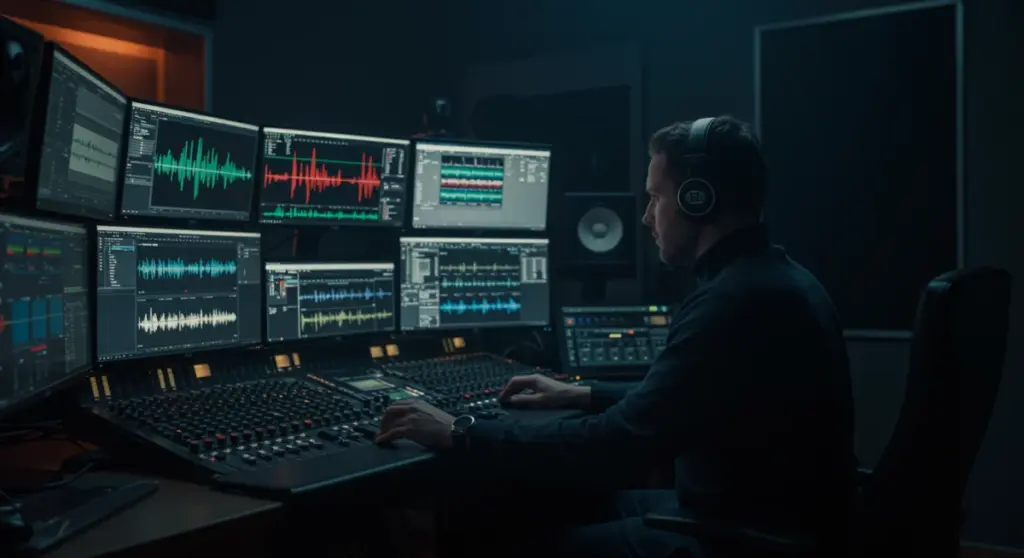
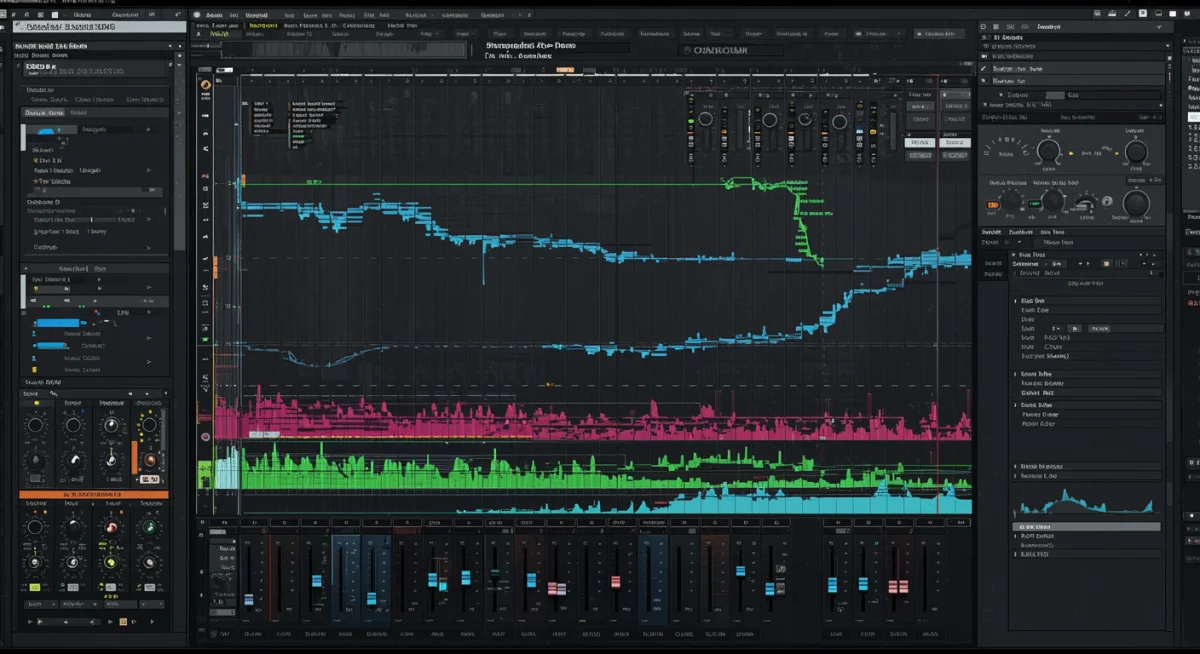
Digital Audio Workstations (DAWs) like Pro Tools, Logic Pro, and Reaper remain central, but they are now augmented by a vast ecosystem of plugins, virtual instruments, and specialized effects processors. These enable unprecedented control over every sonic detail, from the most delicate whisper to the most explosive impact, ensuring that every sound is precisely tailored to the narrative’s needs.
AI and procedural audio generation
AI-assisted sound libraries: Machine learning algorithms are helping organize and suggest sounds from vast libraries, significantly speeding up the selection process.
Procedural sound synthesis: AI can now generate complex soundscapes and effects based on parameters, offering dynamic and evolving audio that reacts to on-screen action in real-time.
Automated mixing and mastering: While not fully replacing human engineers, AI tools are assisting with initial mixes and mastering, providing a strong foundation for human refinement.
These technological advancements are not just about efficiency; they are about expanding the creative palette. AI, for instance, can generate variations of sounds that might be impossible or too time-consuming for humans to create manually, opening new avenues for unique sonic textures. The synergy between human creativity and cutting-edge technology is defining the sound of 2026’s series.
The collaborative art of sound design
Sound design is rarely a solitary endeavor; it is a highly collaborative process involving directors, editors, composers, and other departments. Effective communication and a shared creative vision are crucial for integrating audio seamlessly into the overall production. The best sound designers are not just technicians but also astute storytellers who understand how their work fits into the larger narrative tapestry.
Early involvement of the sound team in pre-production allows for more thoughtful integration of audio concepts, rather than simply adding sound as an afterthought. This proactive approach ensures that sound design is an organic part of the storytelling from the outset, leading to a more cohesive and impactful final product. It’s about building the sonic world alongside the visual one.
Key collaborations in post-production
Director and picture editor: Sound designers work closely with directors to understand their vision and with picture editors to ensure audio perfectly complements visual pacing and cuts.
Composer: A harmonious relationship with the composer is vital to prevent sonic clashes between music and sound effects, ensuring they enhance rather than detract from each other.
Dialogue editor: Ensuring clear, clean dialogue is foundational. Sound designers collaborate to enhance dialogue presence and intelligibility, often cleaning up recordings and adding subtle atmospheric effects.
The collaborative nature of sound design means that every department’s input is valuable. A shared understanding of the series’ emotional and narrative goals allows the sound team to craft audio that elevates every scene. This synergy is what truly distinguishes a good series from a great, unforgettable one in terms of its auditory experience.
Crafting realistic and fantastical soundscapes
One of the greatest challenges and joys for sound designers is creating sonic worlds that are either incredibly realistic or marvelously fantastical. Whether a series is set in a gritty urban reality or a far-flung alien galaxy, the audio must be convincing. This requires a blend of meticulous recording, creative manipulation, and often, a touch of pure imagination.
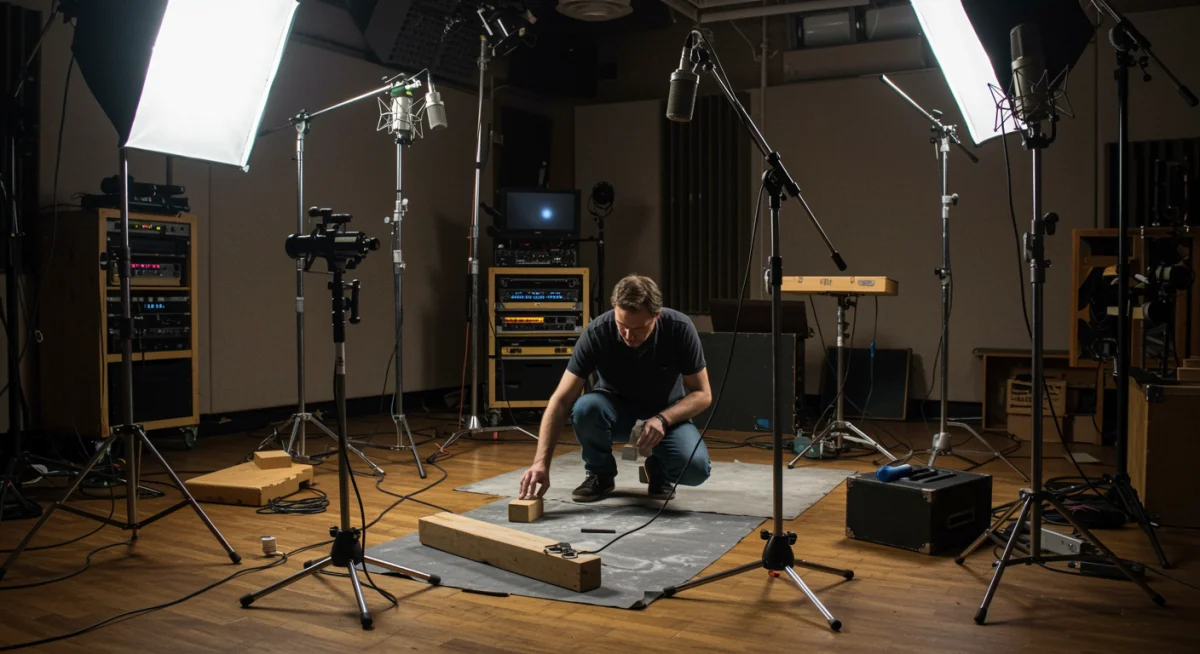
For realistic settings, the focus is on authenticity. This involves extensive field recording, capturing the specific sounds of environments and objects to ground the audience in the reality of the show. Every detail matters, from the specific tone of a car engine to the nuanced rustle of leaves in a particular type of forest. The goal is to make the audience feel like they are truly there.
Building worlds through sound
Field recording: Capturing authentic sounds from real-world locations provides a rich tapestry of foundational audio for realistic settings.
Sound libraries and synthesis: Extensive libraries of pre-recorded sounds, combined with advanced synthesizers, are used to create unique and fantastical sound effects that defy reality.
Layering and processing: Complex soundscapes are built by layering multiple sounds, then processing them with effects like reverb, delay, and distortion to achieve the desired emotional and environmental impact.
When crafting fantastical soundscapes, the rules of reality are often bent or broken. This is where creativity truly shines, as designers invent sounds for creatures, magic, or futuristic technology that have no real-world equivalent. The challenge is to make these invented sounds feel consistent within the series’ internal logic, making the fantastical believable and engaging for the audience.
Future trends: what’s next for immersive audio?
The trajectory of sound design points towards even greater immersion and personalization. As technology continues to advance, the boundaries between the viewer’s reality and the series’ world will blur further. Understanding these emerging trends is crucial for sound designers aiming to stay at the forefront of the industry and continue crafting compelling audio for 2026’s binge-worthy series and beyond.
One significant trend is the increasing integration of haptic feedback, where sound is not just heard but felt. Imagine feeling the rumble of an explosion or the thrum of a spaceship through your seat or wearable devices. This multi-sensory approach promises to deepen immersion significantly, making the viewing experience even more visceral and unforgettable for audiences.
Emerging technologies and methodologies
Adaptive audio: Soundtracks that dynamically change based on viewer choices or interactions, offering a truly personalized and responsive auditory experience.
Neural audio synthesis: Advanced AI models that can generate highly realistic and emotionally resonant sounds from minimal inputs, potentially revolutionizing foley and sound effect creation.
Virtual production integration: Sound design becoming an integral part of virtual production environments, allowing real-time spatial audio mixing and iteration during filming.
The future of immersive audio also includes greater accessibility, with personalized sound profiles that cater to different hearing abilities without compromising the overall artistic vision. These advancements promise to make the rich, detailed soundscapes of 2026’s series accessible and impactful for an even wider audience, cementing sound design’s place as a critical element of modern storytelling.
Key Aspect
Brief Description
Spatial Audio
Utilizes technologies like Dolby Atmos for 3D sound placement, enhancing viewer immersion significantly.
Emotional Impact
Sound designers manipulate audio cues to evoke specific emotions, deepening narrative connection.
Technological Tools
Advanced DAWs, AI, and procedural audio generation are key for crafting complex soundscapes.
Collaborative Process
Successful sound design requires close collaboration with directors, editors, and composers.
Frequently asked questions about immersive audio
What is spatial audio and why is it important for series in 2026?▼
Spatial audio, like Dolby Atmos, allows sounds to be placed and moved in a three-dimensional space around the listener. For 2026 series, it’s crucial because it creates a highly realistic and immersive experience, making viewers feel more deeply connected to the on-screen action and environment.
How do sound designers use psychology to enhance storytelling?▼
Sound designers strategically employ various sounds to trigger specific emotional responses in the audience. By using distinct frequencies, textures, and volumes, they can evoke feelings such as tension, excitement, or calm, subtly influencing how viewers perceive and react to the narrative without explicit cues.
What role does AI play in modern sound design for streaming series?▼
AI assists sound designers through automated sound library organization, procedural audio generation for unique effects, and preliminary mixing. It streamlines workflows and expands creative possibilities, allowing for more dynamic and responsive soundscapes that can adapt to changing narrative demands and viewer interactions.
How do sound designers create sounds for fantastical elements in a series?▼
For fantastical elements, sound designers often blend real-world recordings with synthesized sounds, heavily processed and layered to create unique auditory textures. They focus on establishing internal consistency for these invented sounds within the series’ universe, making alien creatures or magical effects feel believable and impactful to the audience.
What are the future trends in immersive audio for binge-worthy series?▼
Future trends include adaptive audio that reacts to viewer choices, neural audio synthesis for highly realistic sound generation, and increased integration with virtual production. Haptic feedback is also emerging, allowing viewers to physically feel sounds, further blurring the lines between the series and the viewer’s sensory experience.
Conclusion
The world of sound design for 2026’s binge-worthy series is a vibrant testament to innovation, artistry, and technological prowess. From the intricate layers of spatial audio to the subtle psychological triggers embedded within a sonic landscape, every element is meticulously crafted to deliver an unparalleled immersive experience. As streaming continues its ascent, the role of sound will only grow, cementing its status as an indispensable force in captivating global audiences and defining the future of storytelling. The secrets unveiled here offer a glimpse into the dedication and creative genius that makes every binge-watching session truly unforgettable.